
Rodrigo Ackermann
Vice President, LatAm
We turn our focus to Chile, where renewables are transforming both the energy landscape and the digital economy.
Chile continues on the forefront as one of Latin America’s most exciting renewable energy markets. With vast solar resources and growing demand driven by technology and industry, the country is positioned as a global example of how renewable energy can power sustainable growth. Chile has been a first mover in the energy transition, increasing the share of renewables in its electricity generation from around 14% in 2019 to nearly 70% in 2024 – one of the fastest transformations worldwide.
Korkia develops utility-scale solar, wind, and energy storage projects in eight markets across Europe, North and South America. Through this series, we examine the fundamentals and growth dynamics that make each market an integral part of Korkia’s renewable energy portfolio.
Chile’s renewable story is led by solar. In 2024, solar power supplied around 22% of the country’s total electricity, according to the International Energy Agency (IEA), and in January 2025 it reached a record 29% share as coal generation fell to its lowest level on record.
The Atacama region’s exceptional irradiation levels drives much of this growth, but solar expansion is now broader. Central Chile has seen increasing deployment of utility-scale and hybrid projects, while PMGDs (Pequeños Medios de Generación Distribuida, small-scale projects between 500 kW and 9 MW) add further momentum. These smaller renewable plants, connected to local distribution networks and benefiting from stabilized pricing under a special regulatory framework, help diversify Chile’s solar base and support its progress toward the 2040 coal phase-out.
Chile’s renewable energy growth is increasingly intersecting with a digital one. Several major data center projects are underway, reflecting the country’s strong connectivity and renewable energy credentials. Among them, Amazon Web Services has announced a US $4 billion investment plan for its first Chile cloud region, expected to go live in 2026.
Complementing this, Google’s Humboldt subsea cable linking Valparaíso with French Polynesia and Australia is under development and set to dramatically expand international bandwidth. Together, these developments are strengthening Chile’s position as a regional technology and renewable energy hub.
As renewable capacity in Chile grows, the grid has become increasingly constrained in transporting energy from where it is produced to where it is consumed. This has led to curtailment, where solar and wind plants are temporarily disconnected or limited because the transmission network cannot absorb all the electricity being generated.
To address this challenge, Chile is rapidly scaling up its battery energy storage system (BESS) capacity. As of mid-2025, the country had around 1.7 GW of storage connected to the grid, including 1 GW in operation and 0.7 GW in testing, with a further 4.8 GW of projects under construction or declared, according to Revista Nueva Minería & Energía (October 2025). Chile’s official target of 2 GW by 2030 is expected to be achieved well ahead of schedule, highlighting how fast the market is developing.
Chile’s renewable capacity is heavily concentrated in the north, while its main consumption centers lie around Santiago. To bridge this divide, the government is advancing the Kimal–Lo Aguirre transmission line, a 1,300 to 1,500 kilometer project capable of transporting up to 3 GW of power from the Atacama Desert to the central grid. The project is now progressing through permitting and engineering phases.
Korkia entered the Chilean market in 2023 through partnerships with Ciudad Luz and Solar Ray, strengthening its position in Latin America’s rapidly expanding renewable sector.
The partnership with Ciudad Luz includes 650 MW of projects in late phase, among them two hybrid solar and BESS developments. The first pairs a 180 MW solar plant with a 300 MW / 4-hour BESS, while the second combines a 66.2 MW solar facility with a 30 MW / 4-hour BESS. These configurations integrate generation and storage to enhance system flexibility and improve dispatchability within the Chilean grid.
In collaboration with Solar Ray, Korkia is advancing 800 MW of projects in late phase. This includes the Terrazas project in northern Chile, comprising 280 MW of solar PV supported by a 1.24 GWh BESS, demonstrating the region’s exceptional solar resource. In addition, two standalone BESS projects and one solar project with co-located storage, are all in late phase of development.
Chile is not the only market undergoing rapid transformation. See how Italy is emerging as a major force in Europe’s renewable energy transition in our latest market spotlight. Read more:
Renewable market insights: Italy – A growing force in Europe’s renewable energy transition

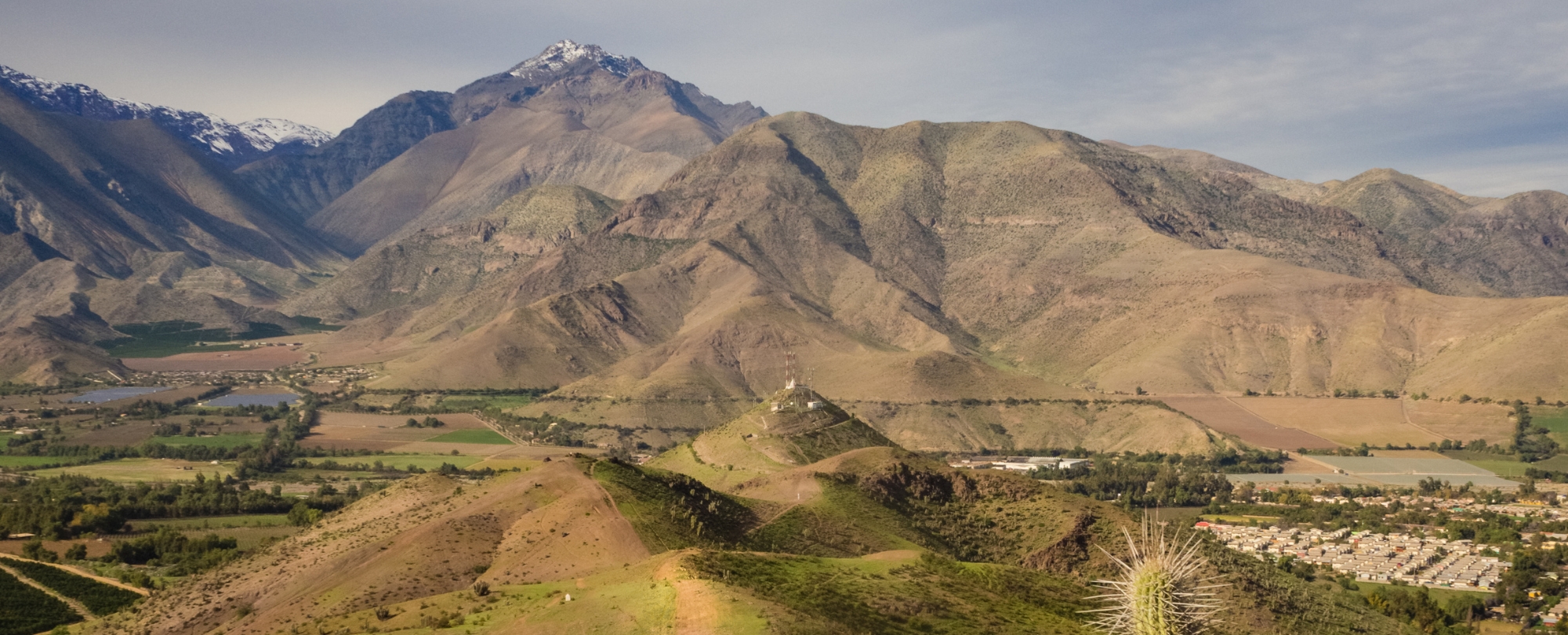
The Terrazas is a landmark solar and storage project in the north-central zone of Chile. The project highlights the potential of...

Lorena Barría, CFO for Korkia LatAm, is one of 67 professionals selected for the seventh generation of the Women in Energy...
We turn our focus to Italy, where renewable energy is playing a key role in shaping a resilient and competitive energy...